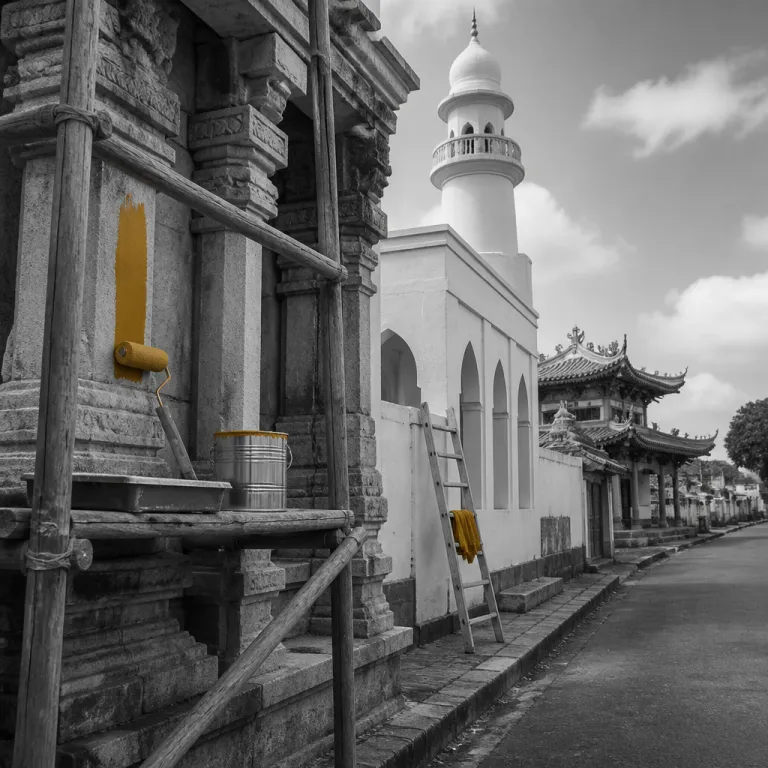
Royal Road as a living map of mauritius temples religious heritage
Royal Road cuts across mauritius like a narrative spine, linking coast, cane fields and dense townships in a single, continuous line. Along this artery, the temples, mosques and pagodas form a visible script of mauritius temples religious heritage, where incense, jasmine and street traffic mingle in the same humid air. For solo visitors, walking short stretches of this road reveals how the island translates faith into colour, sound and daily rhythm.
Nearly half of the population belongs to the mauritius hindu community, and that presence is written in roadside shrines, a towering hindu temple here, a quieter south Indian style sanctum there. These temples mauritius offers are rarely isolated monuments ; they are embedded in neighbourhood life, with schoolchildren passing a temple nestled between snack stalls and sari shops. You will see both a single temple and clusters of temples, each serving different linguistic groups, from tamil congregations to north indian devotees.
Royal Road in port louis is the most concentrated stretch, where Jummah Masjid, Kwan Tee Pagoda and several hindu temples sit within walking distance. This is where the island’s religious geography becomes three dimensional, as domes, gopurams and pagoda roofs share the same skyline. Guided or self guided tours along this corridor help visitors read mauritius temples religious heritage not as isolated sites, but as a continuous urban experience.
Port Louis: Jummah Masjid, Kwan Tee Pagoda and nearby hindu temples
In port louis, start your time visit on Royal Road near Jummah Masjid, whose white arcades and inner courtyard offer a calm counterpoint to the market’s noise. The mosque’s architecture blends indian, Creole and Islamic influences, and it anchors a block where halal eateries, sari merchants and goldsmiths serve both worshippers and visitors. Respect the dress code here ; shoulders and knees covered, shoes removed at entry, and photography only where permitted.
A short walk away, Kwan Tee Pagoda rises above Les Salines, the oldest Chinese temple nestled on the island and a key chapter in mauritius temples religious heritage. Its red and green rooflines, incense coils and fortune sticks speak to the Hakka community that established it, and to the wider Chinese presence in mauritius. The pagoda’s opening hours can vary around each festival, so check locally before you visit to avoid arriving between ceremonies.
Between these landmarks, look for smaller hindu temples mauritius has woven into side streets, sometimes dedicated to amma tookay or other village deities. These shrines may not appear in standard tours, which is why an insider style cultural hotspots guide such as this curated overview of cultural hotspots for discerning travelers is invaluable. Around prayer hours, you may hear shiv shakti chants or see a priest preparing offerings to a local form of lord shiva, so move slowly and let the street itself set your pace.
Grand Bassin and ganga talao: the sacred lake in the highlands
Leave the coast and the island’s religious geography shifts from dense streets to misty uplands, where ganga talao sits cradled in the Black River Gorges plateau. This crater lake, also called Grand Bassin, is considered a direct extension of the Ganges for many mauritius hindu pilgrims, and it anchors the most important maha shivaratri ceremonies outside India. Around the water, a ring of temples and statues forms an open air complex that solo visitors can explore at their own rhythm.
The most striking figure is the immense statue of lord shiva, visible from the approach road and framed by forested slopes. During the maha shivaratri festival, hundreds of thousands of devotees walk from villages across mauritius to this talao, carrying kanwars and singing hymns through the night. Outside festival days, the atmosphere softens ; you will share the path mainly with families, priests and a few travellers tracing mauritius temples religious heritage in quieter conditions.
There is no formal entry fee at ganga talao, but respect is non negotiable, from modest dress to discreet photography. The best time to arrive is early morning, when mist still hangs over the lake and ceremonies begin with conch shells and bells. If you are staying in a south or central luxury property, combine a dawn visit here with an afternoon hike in the highlands using this guide to Black River Gorges trails that many luxury travelers overlook, creating a day that balances spiritual and natural immersion.
From tamil kovils to south Indian sanctuaries: reading architecture and etiquette
Beyond the capital and ganga talao, Royal Road threads past a series of tamil kovils and south Indian style sanctuaries that reward unhurried observation. A tamil temple mauritius side will often display vivid gopurams crowded with deities, while a north indian inspired temple may favour domes and cleaner lines. Both forms belong equally to mauritius temples religious heritage, reflecting migration waves from different parts of the subcontinent.
Look out for kaylasson temple in the Port Louis district, a south Indian style complex where sculpted pillars and ceiling frescoes create a richly textured interior. Further along the island’s central corridor, you may encounter a venkateswara temple or a shrine such as prasanna venkateswara, each serving specific segments of the hindu community with tailored ceremonies and activities. Some complexes include a smaller sanctum for amma tookay or a pandurang kshetra inspired shrine, showing how village traditions travelled and adapted to mauritius.
For solo visitors, etiquette is straightforward but essential ; follow the posted dress code, remove shoes before entering inner halls, and avoid walking directly in front of worshippers during ceremonies. Many temples mauritius offers will indicate opening hours on a simple board, but these hours flex around festivals and private rituals, so treat any schedule as approximate. If you are unsure about the best time for a respectful visit, ask a caretaker or priest, who will usually suggest a quiet window between morning and evening puja.
Planning your route: festivals, hours and luxury basecamps
To experience mauritius temples religious heritage with depth, align your itinerary with the island’s festival calendar rather than only with beach weather. Major events such as maha shivaratri at ganga talao, Cavadee in tamil kovils, Eid in port louis and Chinese New Year at Kwan Tee Pagoda reshape traffic, opening hours and the flow of visitors. During these periods, ceremonies spill into the streets, and the island becomes a moving procession of colour, sound and shared food.
Outside peak festival days, you can structure your time visit around specific corridors of Royal Road, using guided tours for context and then returning alone to linger where you felt most drawn. Luxury and premium hotels in the central plateau or near the capital make ideal basecamps, allowing short drives to multiple temple mauritius sites in a single day. Many concierges now curate private tours that include a mosque, a hindu temple and a pagoda, giving guests a balanced reading of mauritius temples religious heritage rather than a single faith narrative.
When planning activities, remember that religious sites are not attractions in the conventional sense, even if they appear on tourist maps. Keep your dress conservative, carry a light scarf, and be prepared for flexible opening hours, especially around midday or during private ceremonies. For evenings, shift from sacred to secular culture by following this guide to séga performances beyond the hotel stage, which pairs naturally with daytime visits to temples, mosques and pagodas.
FAQ
What is the oldest pagoda on the island and where is it located ?
Kwan Tee Pagoda is the oldest pagoda in mauritius and a key landmark in mauritius temples religious heritage. It stands in Les Salines, port louis, just off Royal Road and close to the harbour. The site remains active, so check local information for opening hours before planning your visit.
Where exactly is Jummah Masjid and can non Muslims enter ?
Jummah Masjid is located on Royal Road near Queen Street in port louis, within walking distance of the central market. Non Muslims are generally welcome in designated areas, provided they respect the dress code and behave quietly. Always follow on site guidance about photography and restricted sections.
Are guided tours available for Royal Road religious sites ?
Guided tours are available through local operators and cultural associations, often combining Jummah Masjid, Kwan Tee Pagoda and nearby hindu temples. These tours help visitors understand how the island’s religious geography developed along Royal Road. Self guided visits are also possible using maps and digital resources, but context from a guide adds significant depth.
How should I dress when visiting temples, mosques and pagodas ?
Dress modestly with shoulders and knees covered, regardless of whether you enter a hindu temple, mosque or pagoda. Remove shoes before stepping into inner prayer halls, and carry a light scarf if you wish to cover your head in certain spaces. This simple dress code shows respect and ensures smooth entry during your time visit.
What is the best time of day to visit these religious sites ?
The best time is usually early morning or late afternoon, when temperatures are softer and ceremonies are more visible. Midday can be quieter, but some sites close briefly, so always check approximate opening hours in advance. During major festivals, expect larger crowds and plan extra time to move between different temples and other religious landmarks.